Showing posts with label Game development. Show all posts

Friday, 14 October 2016

Radlandz - Group Identities


Version 0.7 of the Radlandz rulebook is available now for anyone who wants to see the changes. The game is tightening up and playtesting, when we have done it, has been solid fun. 

Today I wanted to talk about how a roster of figures, a group if you would, will look in Radlandz

One of the defining features I wanted for Radlandz was to give players a load of options of how to customize their groups. 

The two traditional approaches to list building in skirmish games are


Lists

Your gang has a set roster and you can pick stuff within your gang. The advantages of this are that each gang has a defined flavour and play style. The downside to this that you get a form of homogeneity, as few options means few differences between individual groups within the same list

Open recruitment 

You might have a smaller "core list" of defining feature for your group, but there is a massive pool of other units you can pick up. Opening up lists too much also tends towards homogeneity once people figure out the two or three "good" characters you can get. 

A third option

Radlandz uses identities, 12 of them in fact, and one identity is always your "core identity", but it can change through the campaign. This core identity defines a lot of your skill list, equipment and characters, but it can be supplemented by additional identities to provide flavour and variety. 

It means you can get every available skill and model with one group, but certainly not at the same time, and shifting your groups identity scores and building the facilities to recruit new troops and train new skills costs resources. 

How do identity's guide model selection?

Well, they are themes, archetypes, styles and concepts rather than prescriptive groups. For example, if you want a group to be a small group of elite power armour wearing baddasses, you pick Mech as your primary identity. 

This means Mech is a perfectly fine identity if you are playing Space Marines, Sisters of Battle, Brotherhood of Steel, Sky-net Terminators, Killer Robots, or any other concept that fits within the archetype "Big armour smashy"

How does having multiple identities work?

Only one identity is your core, but you can delve into others. For example, if your gang belongs to a mutant township that is settling down and trying to live civilized. You may want to split points between Mutant and Civilized. 

You might want a core group of light-fast moving nomads as your core group, backed up by a few Brutal specialists with over-sized guns and swords. 

You will likely only be able to delve into a few identities during a campaign, but they will add flavor to your lists and open up extra options. You can also play with a single strong identity, and spend upgrades improving their core abilities instead. 

Can I pick any identity?

Identity scores go from 1-6, for an identity to count as a core Identity it must be at level 4 or higher (and you must start with one identity at this level)

Each identity has it's opposite pair, and you cannot have more than 6 points in an opposite pair.

For example, A Group with 5 Arcane can never have more than 1 techno, and if they want to increase Techno to 2, must drop their Arcane identity score to 4. 


The identities are listed below, in their opposing pairs (nomad vs Civilized for example)


What are the identities in Radlandz?


Nomad

Nomad groups have a mobile base of operations and spend their lives moving from place to place scavenging for supplies and parts.

Pick nomad if you see your group as a roving band of scavengers who can hit and run, survive the wastes, and generally be far more annoying than deadly.

Features: Nomad forces are fast moving, lightly equipped and armoured, and can loot very well. They are also well equipped to deal with environmental hazards.


Civilized

Civilized groups have settled down and built a place to defend and protect. They are farmers, builders and engineers

Pick civilized if you see your group as regular people who have to pick up weapons to defend what they have worked hard to protect. 

Features: Civilized forces can field larger forces than most, and provide more special equipment and support items. A bigger roster and better gear overcomes any lack in specialist combat training.  


Arcane

Arcane groups have tapped into some arcane force that exists in the Radlandz. This can be a magical, religious, mystical, psychic or other worldly power.

Pick Arcane if you see your group as a mystic organization or cult roaming the Radlandz led by a powerful wizard or priest.

Features: Arcane forces have access to game-breaking spells and effects. They are also able to use relics and arcane items easier than most. Arcane bosses and specialists are capable of amazing feats, but the rank and file Gruntz tend to be poorly trained and equipped.  
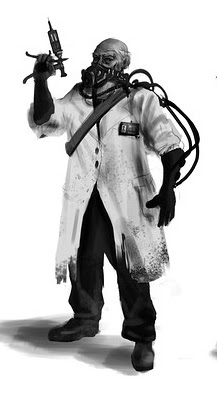


Techno
Techno groups are obsessed with technology and gadgets. They have shiny guns and other interesting devices at their disposal. 

Pick techno if you see your group being obsessed with reclaiming lost technology or hoarders of old world secrets.

Features: Techno forces have the best access to specialized gadgets that allow them to pull of unusual moves on the battlefield. Techno troops have some of the worst stats, but make up for this with excellent equipment. 


Primal
Primal groups have embraced a more primitive lifestyle and a return to nature. Primal groups believe in spirits, omens and the power of the Radlandz.

Pick primal if you see your group as one that has fully embraced the new world of the Radlandz and seek to live with the wastes as opposed to trying to rebuild society.

Features: Primal forces are lightly armed, quiet and fast moving. They have access to many low tech weapons, poisons and traps. They also have limited access to game-breaking mystic powers.          


Mech

Mech groups rely heavily on suits of heavy armour and other machines of war and industry. While others run to battle, Mech forces lumber forward, shrugging off small arms fire.  

Pick Mech if you see your group as a group of armoured knights or elite warriors in the Radlandz.    

Features: Mech forces are small but very well armoured and capable of taking more damage than others           


Warrior

Warrior groups are obsessed with personal glory and one on one melee prowess. They are the ultimate hand to hand fighters in the Radlandz.

Pick warrior if you see your group as a warband of raiders and fighters who want nothing more than to stab people and take their stuff. Or, alternatively, a warrior cult obsessed with honour and personal prowess in battle.

Features: Warrior groups excel in melee combat, but this focus leaves them weak in other areas. They field far fewer guns and ranged support units than other groups.  


Martial
Martial groups are focused heavily on order, discipline and coordinated tactics and command. They use timing and firepower to suppress an enemy to make them easier to defeat.

Pick martial if your group is a disciplined and structured war fighting unit. They can be a formal military group, or one that has adopted a formal command structure in order to survive the Radlandz.  

Features: Martial groups are expert shooters and have other abilities that improve their ability to make coordinated attacks and suppress opponents. Their reliance on ranged weapons leaves them  under-equipped in melee.           

Mutant

Mutant groups are no longer normal in some way. They might be mutated humans, mutated animals, or any other non-human race that has developed in the Radlandz. 

Mutants are tough and can develop unique mutations that give them special bonuses.   
Pick mutant if you want your group to be tough and resilient to the environment of the Radlandz as well as a little unusual.

Features: Mutant groups are defined by their mutations, special bonuses that allow them to specialize in specific skill areas. In general they are poorly equipped, but make up for it with their mutant skills and general toughness.      


Shelter

Shelter groups have escaped the worst of the effects of the Radlandz. They have a secure base that is sealed off from the outside world, whether this is an underground shelter, a space ship, or mobile fortress, what matters is that they are well equipped and secure from the Radlandz.

Pick Shelter if you want your group to be a surviving relic of the past, or an outside force that has recently arrived in the Radlandz.

Features: Shelter groups are well-equipped and supplied. While they don’t excel at any specific combat discipline, they have few weaknesses. They also have access to environmental controlling technology and other gadgets. 


Covert

Covert groups are experts in stealth, infiltration, assassination and other dirty tricks. They rely heavily on surprise attacks and precision. Covert groups are reasonably poor in a stand up fight, but if they are fighting that way, it’s because they aren’t being covert enough.

Pick covert if you want your group to be sneaky and subtle. They could be an order of assassins, a secret society, or Special Forces. As long as the group favours subtlety over brute force, they could be covert.  

Features: Covert groups are lightly armed, lightly armoured, but gain major bonuses to using cover and avoiding being hit. They can deal a lot of damage, but tend not to be able to take much damage in return.                 


Brutal

Brutal groups care little for being quiet or subtle. They bring loud heavy weapons to the fight and pound their opponents into submission. If the big guns fail, then big melee weapons are also an option.

Pick brutal if you want to field a force of highly armed and dangerous fighters who will win the day through application of extreme firepower. They could be    

Features: Brutal groups carry bigger and nastier weapons than anyone else, and have the training to back that up. The rest of the skill selection is lacking though. Every problem needs to be solved with “more firepower”  


So that's the identity's of Radlandz. An archetype for everyone, and if something doesn't quite fit what you have in mind, you can mix and match identities until it does. 

Wednesday, 1 June 2016

The core dice system - Radlandz developer diary.

Well, lets start talking about the core game systems and how they make Radlandz the most awesome little skirmish game out there.

Here are the core concepts behind the dice system

  • Radlandz uses several dice, d6, d8, d10 and d12. 
  • Dice are rolled against a difficulty number in most cases, the number of dice that equal or exceed this target number are successes
  • Target numbers are rarely changed, most effects allow you to stage up or stage down a dice. 
  • Staging up allows you to replace a dice with one higher type, say a d8 to a d10
  • Charging, aiming and ganging up normally allow you to stage up dice. 
  • Staging down forces you to replace a dice with a lower one, say a d8 to a d6
  • Wounds, being pinned and other negative effects normally cause dice to be staged down
  • A lot of rolls allow you to expend a dice roll of 4 or more that didn't succeed to add 2 to another roll. This means rolling 5,5,5 when the target number is 6 means you can actually succeed, and reduces a bit of the luck element.  

How do i determine my dice pool?


Well, a models stats determine their starting dice pools before any modifications. The three stats that have dice pools are

Fight: Melee pool
Shoot: Shooting pool
Grit: Morale/leadership/special powers pool

Example

Say your model has a Fight pool of 2d8/1d6 and wants to shoot a regular trooper in light cover. That troopers defence in light cover is 7, so you will need to roll 7's to hit. With 2d8/1d6 this is pretty difficult to do. 

So, the model aims gaining 1 dice shift and also has a scope on their rifle which adds an additional shift when taking an aim action.

This is a total of 2 positive shifts which can be added in any way to your dice pool. You could boost a d8 twice to make it a d12, giving you d12/d8/d6, or boost both d8s to d10's, giving you 2d10/1d6. Or any other combination. 

The final choice is to boost the d6 twice to d10, for a dice pool of 1d10/2d8

The roll is 9,5,4 on the three dice. The nine is good enough to beat 7 so scores 1 hit. You then choose to burn the 4 to add +2 to the 6, making it an 7. Also good enough to score a hit. 

A 2 hit shot does considerably more damage than a 1 hit shot, but we will cover that another time.

Conclusion

By making most adjustments in the game dice shifts, and keeping target numbers relatively stable, it makes the game variable, without producing massive swings. Even with all the best modifiers in the game, the average shooting target number will be around 6-8, so d12's, while a lot better, hardly mean you are going to always hit and always kill someone. 

Wednesday, 18 May 2016

9 Games that inspired me when making a game.

As part of the Radlandz introduction, I want to talk about the game systems that inspired aspects of the rules. I've played a lot of games, and no game system comes from isolation. Its all part of the game development process and every new game stands on the shoulders of the giants that preceded it. 

So in this post I will talk about the games that either inspired me on a gameplay level, or games that I used mechanical ideas from. Some will be obvious, some a little more obscure. 

First up, the most obvious ones. 

Necromunda/Mordheim


In all honesty, their would likely be no Radlandz without these two games. They were the original "warband" level games that I played and their influence can be seen throughout.

Core concepts like group size, rosters, character types, loot, experience, skill upgrade and territory all find their origins here 


The core gameplay mechanics are very different, but the overall feel is similiar. But I really wanted to make a few changes in the overall feel to "fix" what i perceived to be problems with the games.

The two core issues are randomness and loss. Random skill increases always led to big skews in power between gangs, so instead I allow people to select them from a short list.


Loss was a huge deal in these games. If you played your first game with a gang and your heavy died, taking almost a 3rd of your gang value with him, you were actually better off rolling up a new gang. In Radlandz, your group will never drop below a minimum level of functionality. New troops are free and they come with their basic kit, they just have no XP or special upgrades. So even if your entire group is killed in the first game, you don't need to reroll.    


Frostgrave


"A dog made me build Radlandz"


Frostgrave is the game that kicked off the whole process. I really really wanted to like it, but I found the randomness and lack of distinction in the forces frustrating. 

In the game we play, a war dog ate most of my army. Single handily killing 4 characters, a man at arms, an infantry man and two thugs. I rolled no less than a 13 on all 4 combats, but the war dogs player always rolled higher. The difference between a -1 rating war dog at 10 points and a +1 rating Man at arms at 80 points is negligible in a d20 system. I felt the game was pretty damned arbitrary at that point and that units really didn't matter much.

But I saw potential in the game, but figured it needs many house rules to make work. The randomness was too swingy for me, the spell lists full of chaff, the XP system skewed heavily in favour of combat mages, and the cost of losing your wizard was brutal.

What I really liked were the turn order sequence and the idea that Wizards had spells outside their primary disciplines. I've adapted the turn order sequence and am using something similar, and the wizard selection thing has become the "identity system", where a group has a primary identity it can buy characters from, but can also pick up secondary identities and populate their list with skills and troops from there.

A Mutant identity group fields mutants as their primary forces, but if they get some points in the Arcane identity, they may pick up an apprentice spell caster and some magic skills. Hopefully, with 12 identities, this means that there are a plethora of combinations and no group looks completely like another. 


Spartacus - A game of blood and sand


Spartacus was one of the most surprising games I've played. It a really good design, true to the source material, and a great backstabbing fun fest.

The gladiatorial combat system is fun and simple, and represents wounded characters losing fighting capacity really well.

I borrowed a lot of elements from the combat system for the melee system of Radlandz.

Each player rolls their melee pool of dice, then modifies them with parry re-rolls, shields and other tricks. Then they match numbers on their dice from highest to lowest. The more dice you win on the matchup, the more damage you inflict. Tie and you both inflict damage. Strong melee characters are normally either more dice or bigger dice, so will win more often. Wounds reduce the size of your dice in the dice pool.

What this has mean't in testing is that well trained unwounded soldiers tend to butcher wounded ones easily, but not always. Poor quality troops have taken down melee masters as well, one expert melee character was taken down by a group of 4 guys with knives, as each one got a small hit in, reducing the big guys combat skills and making him easier to wound. Gang ups really work well.

It's also led to two already wounded characters killing each other in combat as they both score enough hits to do a killing blow to each other. 

The overall result is a rather cinematic combat system that has already produced numerous classic and memorable moments. 

Melee is the key to the game, shooting is designed to pin people and wound them, making them easier to mop up in close combat. 


Fortress America


Fortress america is an inspiration for the dice shifting mechanic in Radlandz. In fortress america, better units roll a higher sided dice which has a better chance of hitting and doing damage. Defending can shift a units dice up by one improving their chances of hitting and damaging.

In Radlandz I use a similar system. Each model has it's default dice pools for making ranged, melee, and morale checks. But these pools can be modified up and down depending on the models state. For example, Aiming and Charging allow you increase a dice by one size, each wound level reduces a dice by one size. 


The core difficulties to pass most checks are designed around the difficulty required for a d8 to succeed. So having upgraded dice to d10's improves that considerably, without altering the difficulty of the roll. In a way, it allows for more marginal alterations of difficulty than changing a target number, especially in a multiple dice system.

All dice are discrete, so if the target number for a roll is 6, and you roll 8, 6, 4. You score two hits, dice are never added together in Radlandz.  


Dice can go all the way up to a D12, but never below a D6. 


X-wing


A really simple one here, D8's

Looking at X-wing over the last few years I have really gotten to appreciate the D8 in regards to probability. 12.5% per pip is really easy to work with, as a shift in difficulty by one is significant, but not huge. 


Also, the core concept of rolling a number of d8's and marking the number of hits scored is directly linked to X-wing in its original form.

With dice shifting and the like it's now quite different, but the ranged combat system started off with x-wing as the inspiration.  


Flames of war

I've never actually played Flames of War, which seems odd as I know a lot of one of the oldest playtest groups for the game (who I am hoping to co-opt into testing this), i'm a military history nerd, and I own the rule book.

I just never got around to it.

The one thing I did love reading the rules was the idea that the difficulty to hit a solider with a ranged attack is based on their training level. Conscripts use cover poorly, Veterans hug the dirt like its a long lost teddy bear.

In Radlandz, the difficulty to hit a model is based on their Brainz stat. Smart and savvy characters take cover quickly, poorly trained troops do not. As characters get more experienced, they become harder to hit. Also, big dumb killer robots are easy to hit, even if they are hard to damage.

It's a simple concept, but one I had not seen before Flames of War. 


Cthulhu wars

This is an example of how a mechanic in a game can inspire you to make a game design decision, that if you didn't spell it out clearly, no one would probably notice.

In Cthulhu wars, each faction has six spell books that are unlocked as complete objectives. You don't get all your powers and abilities at the game start and must do stuff to get them.

This system inspired the base system in Radlandz. Bases determine what models you can field and how many skills are on your available skill list.

At the start of the campaign, you may only have access to 3 or 4 skills, and 3-4 unit types. But as you progress, you can expand the base and gain more skills to choose from, more unit types to field, and more equipment options from resources.


Civilization 5 
Inspiration doesn't just come from board games. Computer games can also have excellent concepts that you can draw on, and I did that with Civilization 5 and strategic resources.

In Civ 5, you can only field as many tanks as you can supply with oil, or as many cavalry as you can supply with horses. I incorporated this idea into the base and roster mechanics. 

Each base building produces a certain amount of resources that you can use. A lot of basic gear, like swords, rifles, pistols and basic armours don't need any resources to field. But heavy machine guns, power weapons and magic armour do. 

The consumables resource also serves as your "unit cap" and restricts the number of models you can field.

Different bases provide different resources, so a Techno idenity base will get a lot of Energy resource that it can use to field multiple laser weapons, while a Mech identity base will have a lot of industrial resource to supply power armour.

It allows a group to field special weapons, while ensuring that not every model has power armour, a laser cannon and a magic sword when groups get very experienced. 


It also allows for progression, as your base expands you get more options. Base expansion is capped, but can be reconfigured in a long campaign. Decide you want more machine guns, demolish a building providing mystic resource and build one that provides industrial. 

Conclusion
Designing a game is about your own experiences and what you enjoyed playing in the past, and how, in your own way, you want to replicate that experience.
I think it's good to acknowledge those inspirations and sources. No doubt there are things I've forgotten to mention, and other indirect sources. But these are the ones that stood out.

This should give some insight into what the final Radlandz product will look like

Tuesday, 19 April 2016

Radlandz - Post apocalyptic miniatures gaming

So, I ended up playing Frostgrave for the first time this weekend and I really enjoyed playing a skirmish wargame again.

I loved necromunda and really feel that scale, and style of campaign is excellent fun. 

But Frostgrave left me feeling like their were almost as many problems with the game as their were great parts. I couldn't help but trying to "fix" the game as parts of it seemed really wonky and awkward to me.

So, my solution? Write my own damned skirmish game.

Yep, this project is under the working title of "Radlandz" and is a post-apocalypse miniatures game. Frostgrave allows you to use all your fantasy miniatures, so i thought why not do something like that in a sci-fi setting. This way people can dust off their Necromunda gangs, use star wars miniatures, WWII figures or virtually anything else. heck, a lot of fantasy figures will work in this setting like Chaos cultists and skaven.

So here are my design guidelines for how i want the game to shape up

  • Allow a lot of freedom in how a group is put together so people can customize and explore 
  • Make factions that are flavorful and fun
  • Allow any model to be used somewhere, so the game is accessible to anyone with figures.   
  • Make melee important and brutal
  • Make cover essential
  • Have all combat decided in two rolls or less. 
  • Create solid campaign rules that allow groups to expand, but stop runaway leaders
  • Include high tech, low tech, magic, mysticism and power armour in one setting
Last night I wrote a draft of the core rules in one sitting. bare in mind this is literally a first pass at the concepts and still needs a lot of fleshing out and testing. 

So, is there a market out there for a game like this. What would you like to see in a skirmish game. I'm at the very early stages of development so get your ideas in now!

Related Posts Plugin for WordPress, Blogger...